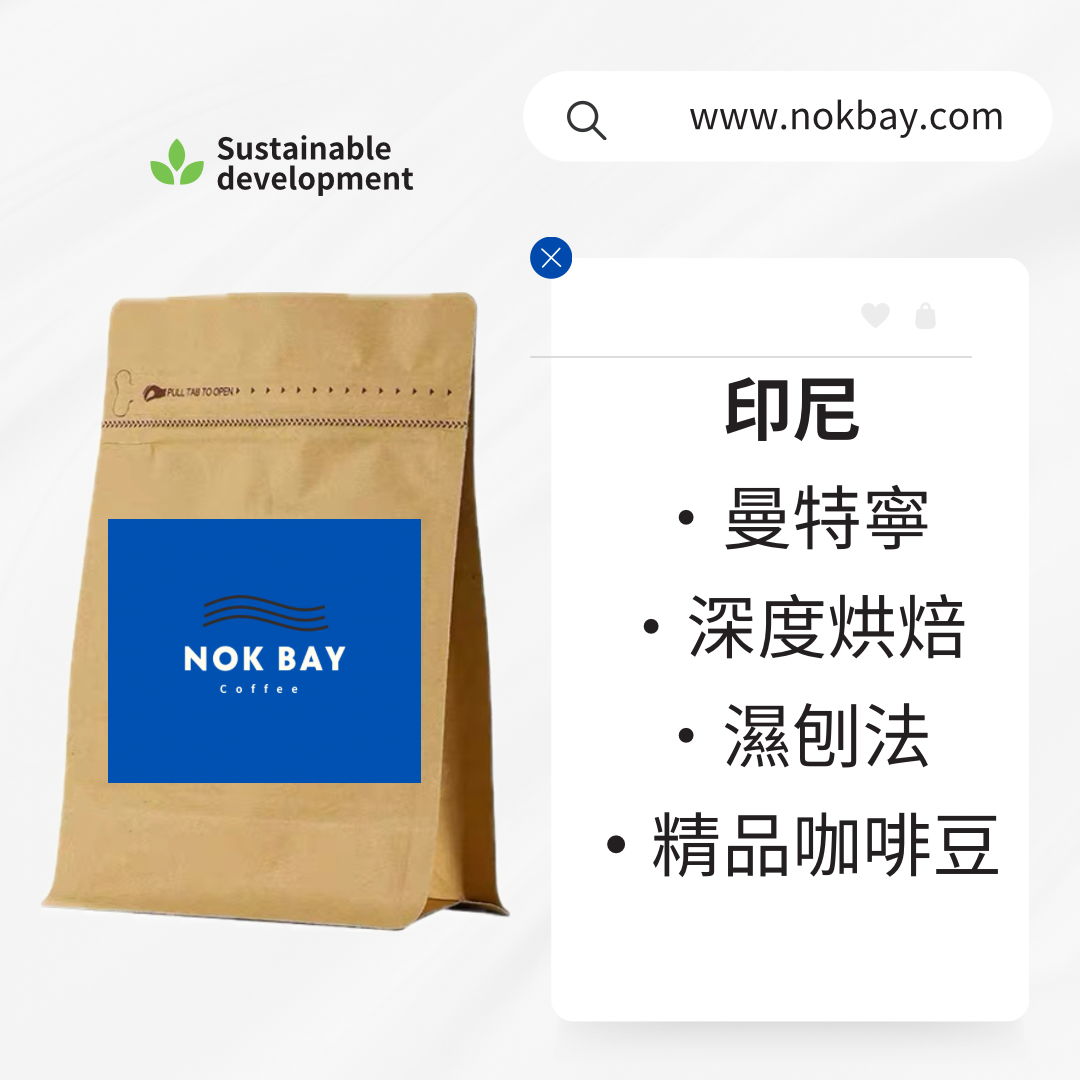
Nok Bay Coffee
Indonesia|Mandheling G1|Deep roast|Wet hulling|Specialty coffee beans|Nutty dark chocolate flavor
Indonesia|Mandheling G1|Deep roast|Wet hulling|Specialty coffee beans|Nutty dark chocolate flavor
Couldn't load pickup availability
Flavor: Nuts | Cream | Chocolate
Dark roast, suitable for making Italian-style beans.
Sweetness 🔸🔸🔸🔸
Body richness 🔸🔸🔸
Acidity/Sour 🔸🔸🔸🔸
Aroma 🔸🔸🔸🔸
Country: Indonesia
Region: Sumatra
Variety: Mandheling G1
Process: Wet planing method for Gilling Basah treatment
Altitude: 1300-1500m
Baking: Dark Baking
Baking date: Approximately 7 days fresh
Mandheling is one of Indonesia's most representative coffee beans, renowned for its low acidity, full-bodied flavor, and unique herbal and woody notes, making it popular in the Asian market.
Mandheling is not a region of origin or a variety name, but rather stems from a linguistic misunderstanding during World War II. At the time, a Japanese officer drank a uniquely flavored coffee at an Indonesian coffee shop and asked for its name. The shopkeeper misunderstood this as an inquiry about his ethnicity and replied, "Mandheling."
After the war, the officer introduced this coffee to Japan, where it became very popular, and from then on, "Mandheling" became synonymous with Indonesian coffee.
Mandheling coffee has become internationalized due to its popularity in the Japanese market, and its rich flavor has made it a classic choice for black coffee lovers, especially in Taiwan and Japan where it is considered an "entry-level black coffee".
This Mandheling ling primarily originates from Sumatra, Indonesia, specifically from one of its two core regions: Lintong, a traditional Mandheling growing area. It is processed using the wet-hulling method and boasts flavor profiles of earthy, woody, and dark chocolate notes.
• Altitude: 1000-1500 meters, fertile volcanic soil, tropical rainforest climate provides ample rainfall
Signature processing method: Wet Hulling
•process:
- After removing the peel and pulp, ferment briefly.
- Remove the inner pericarp when the fruit is initially dried to a moisture content of 30-50%.
- Secondary drying to 12-13% moisture content
• Characteristics: Due to the accelerated processing in a high-humidity environment, the beans develop cracks (sheep's hoof beans), resulting in a low-acidity flavor with herbal and woody notes, but with a relatively high defect rate.
Grading Standards
• Graded by the number of defects per 300 grams of green beans: G1 (0-
From G5 (3 defects) to G5 (46-90 defects)
分享